Governance
CORPORATE GOVERNANCE
Sound corporate governance is fundamental to TTI’s long-term success and accountability.
Our governance framework is designed to uphold transparency, ethical conduct, and responsible management across operations. We align our practices with leading global sustainability standards and frameworks, including the UNSDGs, GRI, SASB, HKEX, IFRS, and relevant local reporting regulations.
In line with these governance practices, TTI regions are subject to mandatory climate reporting requirements, beginning with Australia under the Australian Sustainability Reporting Standards. This includes the publication of a standalone sustainability report alongside annual financial statements, outlining region-specific climate risks and opportunities, emissions, climate-related financial risks, scenario analysis, and management approaches. The ANZ business unit is expected to release a corresponding sustainability publication for the 2025 reporting year, to be made available in the subsequent reporting cycle. As a proud signatory of the UN Global Compact, we reinforce our commitment to responsible business conduct and the Ten Principles covering human rights, labor, the environment, and anti-corruption. We also demonstrate transparency through annually disclosing to CDP, reporting on our greenhouse gas emissions, water consumption, and climate-related performance and initiatives.
The Board maintains oversight of the Company’s corporate governance framework, encompassing our codes of conduct, policies, and compliance practices. It reviews and endorses disclosures through the Corporate Governance Report, published as part of our Annual Report, and provides guidance to management on continuous improvement and emerging regulatory developments. Furthermore, the Board oversees the Company’s business continuity management plan to ensure operational resilience in the event of environmental, social, or security-related disruptions.
This reporting period, we formalized an internal ESG Policy to reinforce accountability and clearly define governance of our environmental and social priorities. The policy provides guidance to associates across the organization, ensuring our sustainability commitments are consistent in our daily operation as well as long-term strategic planning.
This ESG Report should be read in conjunction with TTI’s Annual Report 2025, which contains detailed information and a comprehensive review about our corporate governance.
Sustainability Oversight
The Board provides oversight and strategic direction for TTI’s sustainability initiatives. This oversight includes assessing dependencies, impacts, risks, and opportunities related to our business, financial performance, climate change, and biodiversity. Prior to publication, the Board reviews and approves the annual ESG Report to ensure accuracy, transparency, and alignment with stakeholder expectations.
Sustainability Oversight
Sustainability Oversight
The Board provides oversight and strategic direction for TTI’s sustainability initiatives. This oversight includes assessing dependencies, impacts, risks, and opportunities related to our business, financial performance, climate change, and biodiversity. Prior to publication, the Board reviews and approves the annual ESG Report to ensure accuracy, transparency, and alignment with stakeholder expectations.
The Sustainability Management Flow
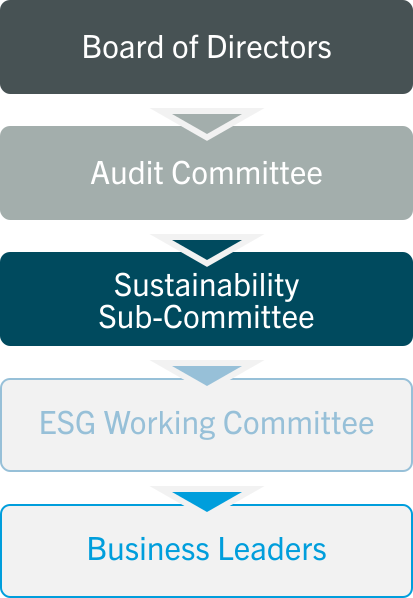
Sustainability management at TTI is structured through a multi-tiered approach that ensures accountability and integration across all business levels, from operational execution to Board oversight.
Within each business unit, designated sustainability leaders are responsible for implementing and monitoring ESG initiatives. These leaders either specialize in overseeing environmental Key Performance Indicators (KPIs) and decarbonization efforts, or enhancing community relations and overseeing social KPIs and initiatives. Insights and performance updates from these leaders are reviewed quarterly as part of the ESG Working Committee meetings to maintain alignment across the organization.
Building on these efforts, the ESG Working Committee, supported by our global EHS teams and EMS committees, coordinates the development and execution of sustainability initiatives company wide. This includes driving employee engagement through both online and in-person training programs that reinforce understanding of EHS and sustainability principles. At the Group level, the Finance department oversees the ESG reporting process by tracking KPIs, managing disclosures such as CDP reporting, and collaborating with Investor Relations, Legal, Human Resources, and Operations to ensure compliance, transparency, and consistency across all business units.
Oversight of sustainability at the governance level is carried out through the Board’s Sustainability Sub-Committee, which focuses on the management of material ESG risks and opportunities and their impact on business strategy and performance. The Sub-Committee, composed of Board members and senior executives, reviews ESG related policies, performance, and training to ensure sustainability initiatives remain aligned with the Company’s long term goals. Reporting directly to the Audit Committee, the Sub-Committee ensures ESG considerations are embedded into TTI’s governance structure.
The Audit Committee evaluates the Company’s progress toward ESG goals, monitors the effectiveness of sustainability programs, and reviews risk management processes to ensure alignment with business priorities. Regular updates are provided to the Board of Directors, which maintains ultimate oversight of TTI’s sustainability strategy and performance. At the executive level, the Executive Vice Chairman is responsible for climate and nature-related matters, ensuring these priorities are integrated into operational and strategic decision making across the Group.
Group Risk Mitigation Process
The Sustainability Management Flow
The Sustainability Management Flow
Sustainability management at TTI is structured through a multi-tiered approach that ensures accountability and integration across all business levels, from operational execution to Board oversight.
Within each business unit, designated sustainability leaders are responsible for implementing and monitoring ESG initiatives. These leaders either specialize in overseeing environmental Key Performance Indicators (KPIs) and decarbonization efforts, or enhancing community relations and overseeing social KPIs and initiatives. Insights and performance updates from these leaders are reviewed quarterly as part of the ESG Working Committee meetings to maintain alignment across the organization.
Building on these efforts, the ESG Working Committee, supported by our global EHS teams and EMS committees, coordinates the development and execution of sustainability initiatives company wide. This includes driving employee engagement through both online and in-person training programs that reinforce understanding of EHS and sustainability principles. At the Group level, the Finance department oversees the ESG reporting process by tracking KPIs, managing disclosures such as CDP reporting, and collaborating with Investor Relations, Legal, Human Resources, and Operations to ensure compliance, transparency, and consistency across all business units.
Oversight of sustainability at the governance level is carried out through the Board’s Sustainability Sub-Committee, which focuses on the management of material ESG risks and opportunities and their impact on business strategy and performance. The Sub-Committee, composed of Board members and senior executives, reviews ESG related policies, performance, and training to ensure sustainability initiatives remain aligned with the Company’s long term goals. Reporting directly to the Audit Committee, the Sub-Committee ensures ESG considerations are embedded into TTI’s governance structure.
The Audit Committee evaluates the Company’s progress toward ESG goals, monitors the effectiveness of sustainability programs, and reviews risk management processes to ensure alignment with business priorities. Regular updates are provided to the Board of Directors, which maintains ultimate oversight of TTI’s sustainability strategy and performance. At the executive level, the Executive Vice Chairman is responsible for climate and nature-related matters, ensuring these priorities are integrated into operational and strategic decision making across the Group.
Group Risk Mitigation Process
Material Topic
Business Conduct

Upholding strong governance and ethical conduct through accountability, transparency, risk management, and global stakeholder engagement.


